THE RACE BETWEEN ROAD & TRAIL
There are road races. There are trail races. And somewhere in the space between them, there is a style of running that New England should probably have more of…
THE RACE BETWEEN ROAD AND TRAIL
New England has one of the richest running cultures in the country.
Its classic road races are woven into the identity of the places that host them. The Boston Marathon carries more than 30,000 runners from Hopkinton to Boston. The Falmouth Road Race brings roughly 12,800 runners along seven miles of Cape Cod coastline. Maine’s Beach to Beacon welcomes nearly 6,500 runners, while Vermont’s Covered Bridges Half Marathon carefully limits its field to 2,300 and still sells out within minutes.
These races are popular for good reason. They’re fast, fiercely competitive yet friendly, and social, and wonderfully straightforward. You know the distance. You know the surface. You can compare your finishing time against last year, your friends, or every other half marathon you have run.
At the other end of the spectrum, New England’s trail and mountain races lean proudly into trail culture, harvesting vert’, and difficulty.
The Loon Mountain Race climbs more than 2,200 vertical feet in 6.6 miles, eventually reaching un-runable 40-percent gradients. The Mount Washington Road Race gains 4,650 feet in only 7.6 miles. Seven Sisters covers 12 miles of rocky, technical singletrack on an out-and-back route with more than 3,500 feet of climbing. Then there are the region’s legendary ultras—the Vermont 50 and Vermont 100—which travel across enormous networks of trails, dirt roads and private land.
Again, these races are special precisely because they know what they are. They are steep, technical, long or some extreme combination of all three.
But between the classic road race and the traditional trail race, we’ve felt that there’s always been a bit of an open space. Something overlooked and ignored.
What about runners who want something more adventurous than a paved half marathon—but who are not necessarily interested in scrambling across highly technical granite slabs, running repeated laps up and down a ski resort, or committing to their first ultramarathon and subsequently begging their entire extended family to help crew them?
What about a race that still allows you to truly run and run fast, while giving you the feeling that you actually traveled somewhere?
That is the space the Vermont Overland TRAIL was designed to occupy.
NOT A HALF MARATHON. NOT AN ULTRA.
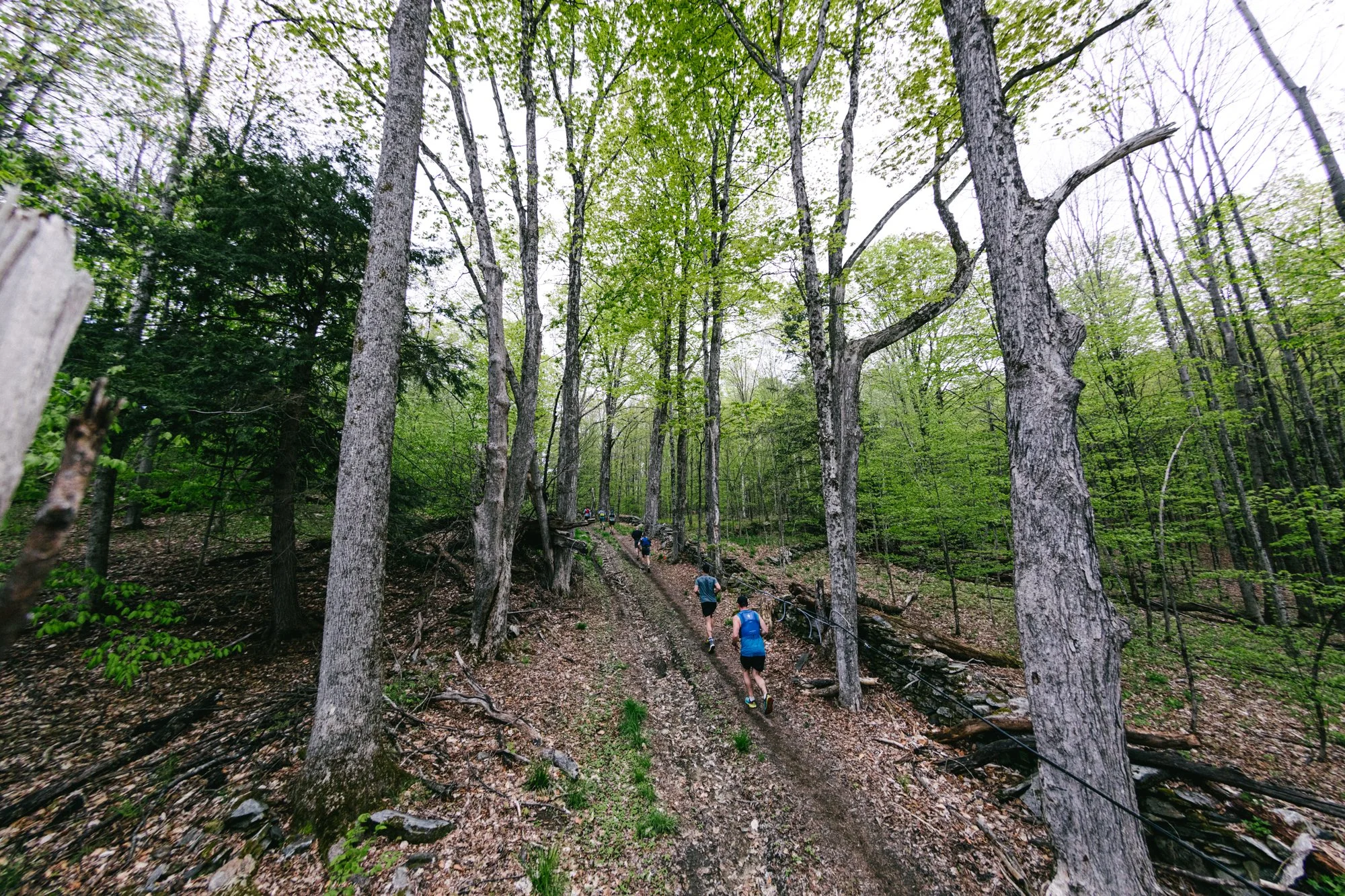
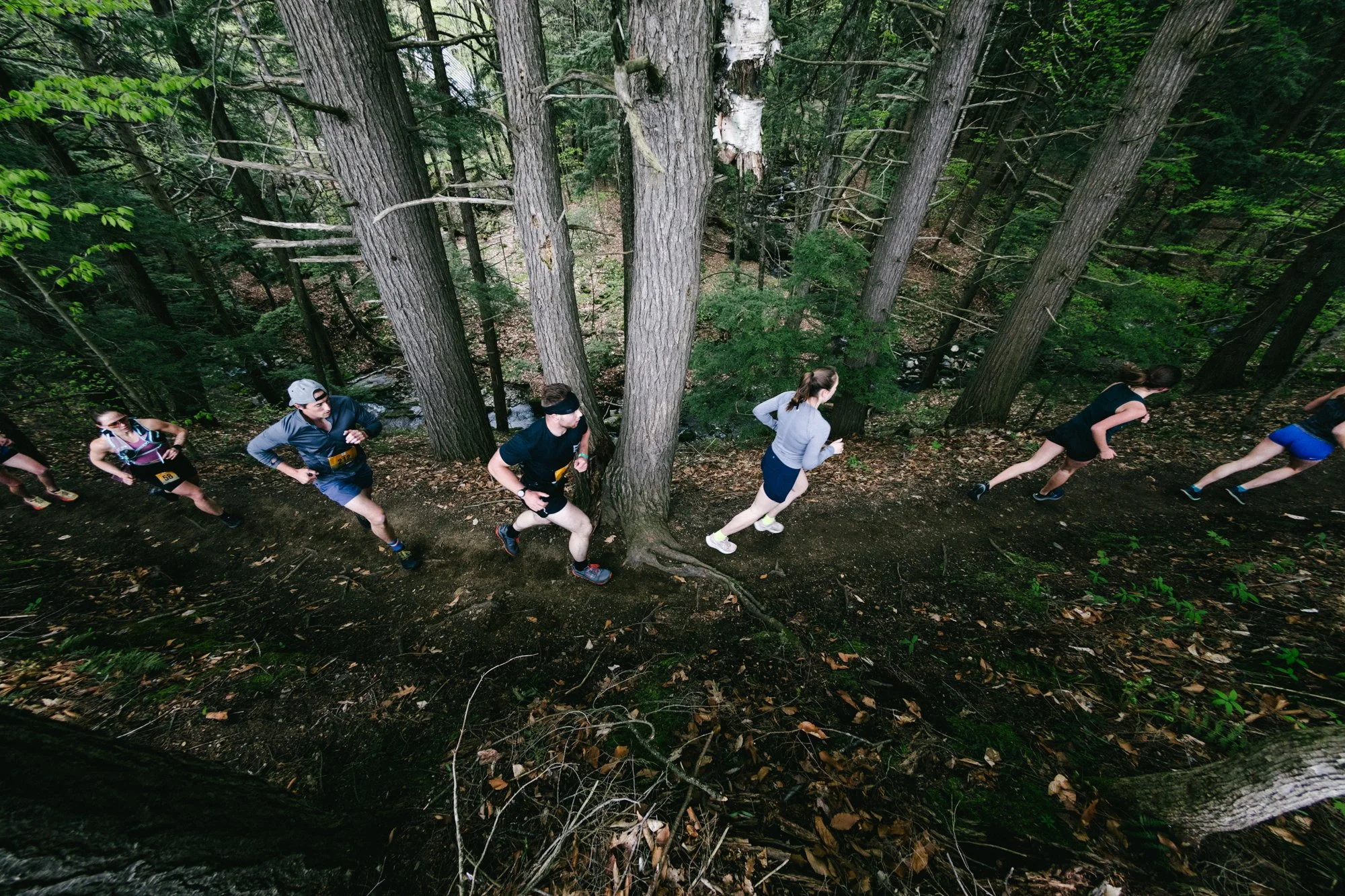
The full Overland TRAIL course covers approximately 15 miles and gains roughly 2,500 feet as it travels through West Windsor, Vermont. A shorter 5-ish-mile Overland PATH option is available as well. Both begin and finish at Ascutney Outdoors on Sunday, August 16.
The distance is intentionally a little unconventional. It’s not the point.
We didn’t design the course by first choosing a familiar race distance and then forcing the landscape to accommodate it. There was no requirement to find exactly 13.1 miles, place a turnaround cone at 6.55 miles and send everyone back the way they came.
The landscape came first. (like it always does and always will in mother nature)
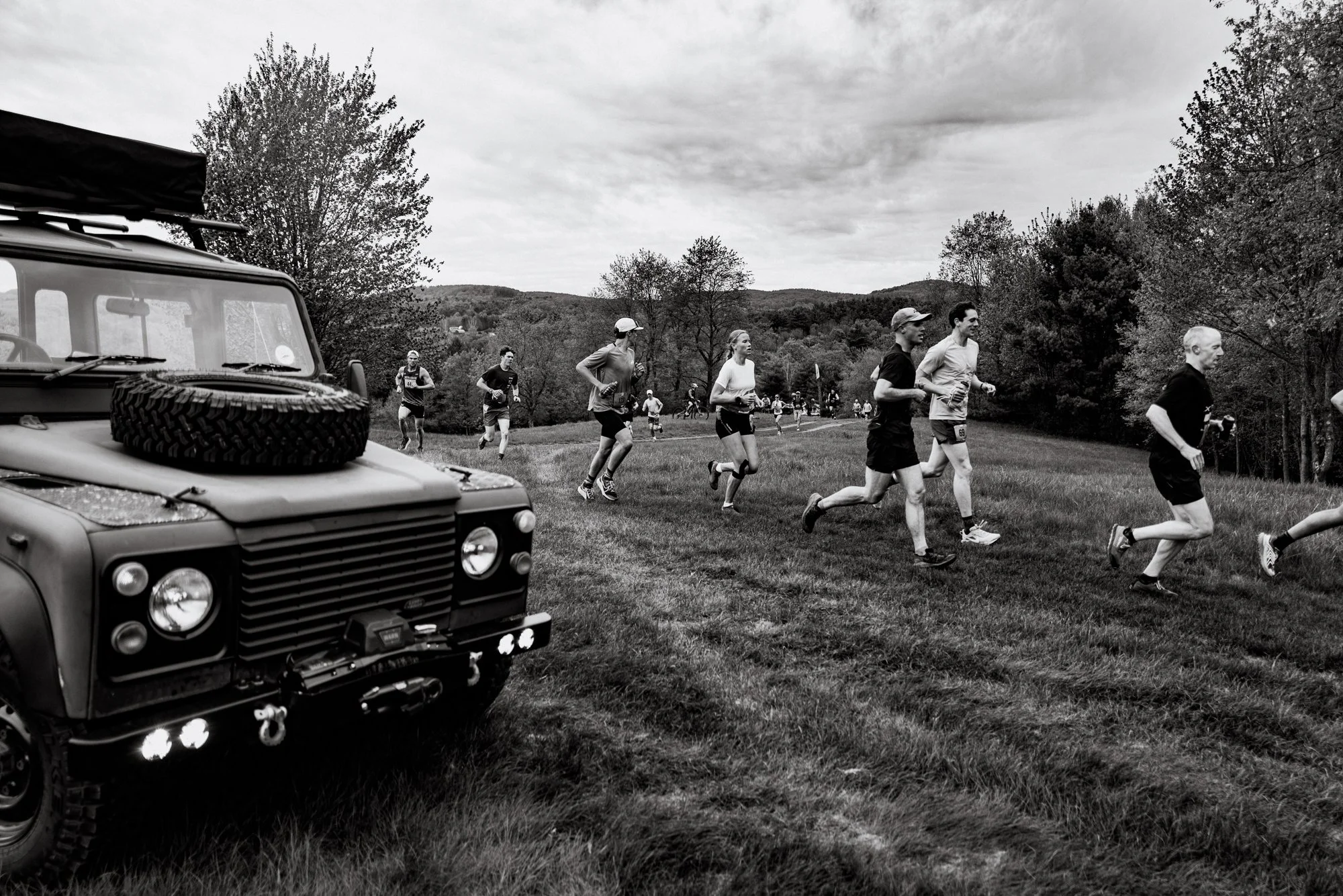
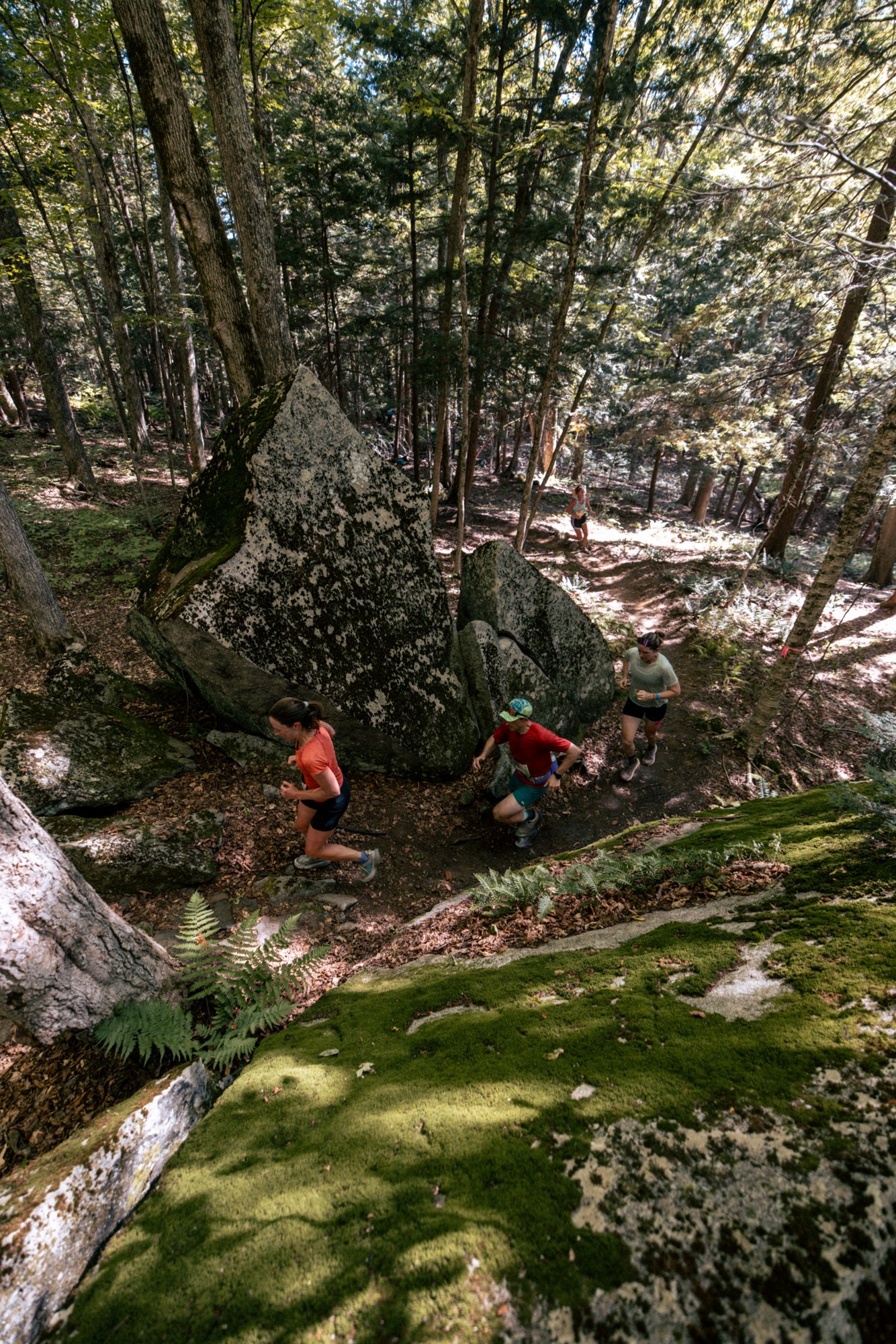
The course links together the types of surfaces that actually define this corner of Vermont: narrow trails, old roads, fields, forest, dirt roads and pieces of terrain that do not fit neatly into one category.
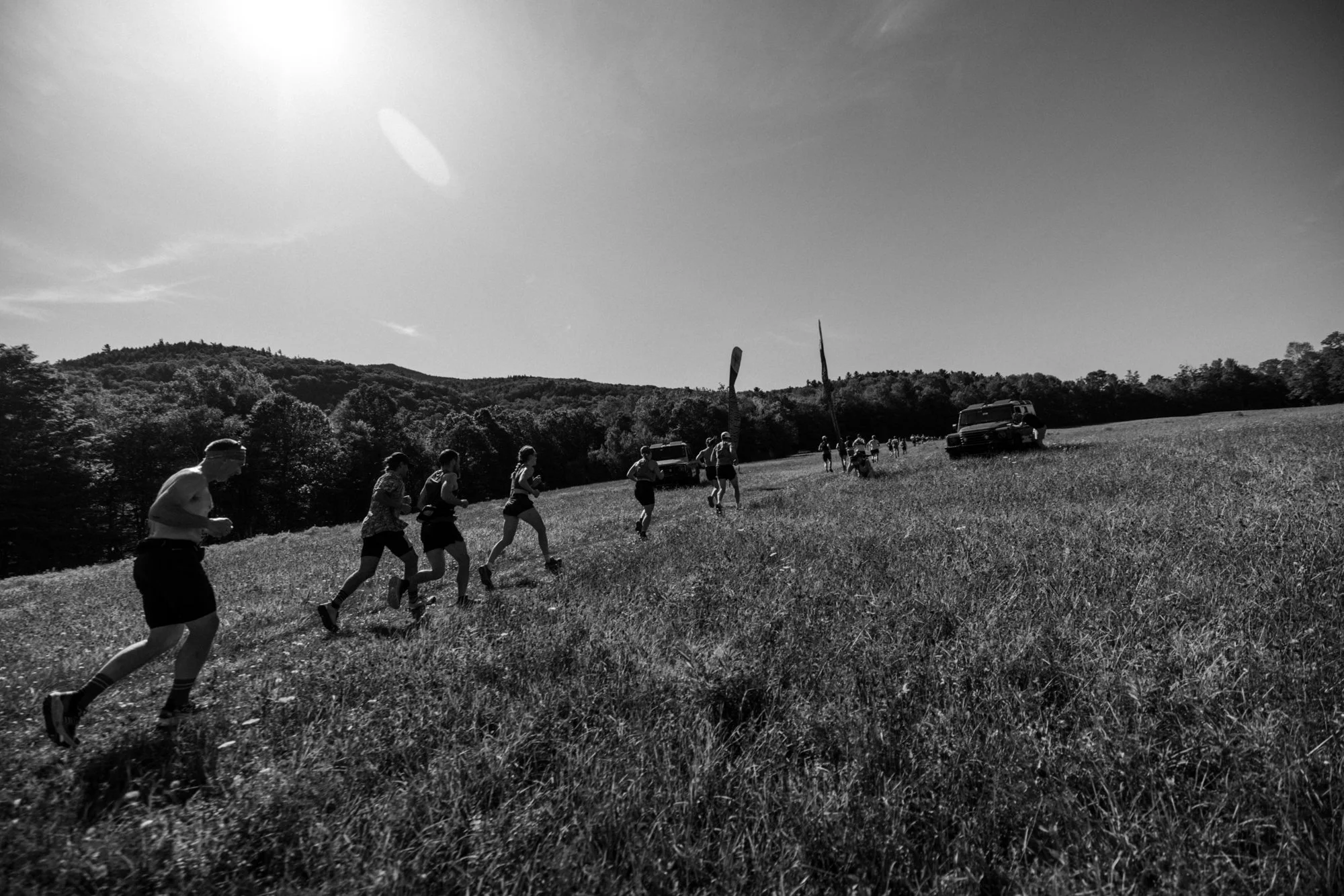
Some sections feel like a proper trail race. Others allow you to open your stride and run fast. The climbs are substantial without turning the entire event into a hiking contest. The terrain asks for attention, but the goal is not to find the rockiest and most technically difficult route possible.
It is less about conquering one mountain and more about moving through an entire landscape with a flow that leaves you with a sense of place and wonder.
A COURSE SHOULD TAKE YOU SOMEWHERE
Many race courses are shaped by necessity.
Road races require manageable intersections, police coverage and certified distances. Ski-area trail races often rely on repeated climbs, resort access roads or laps because the venue provides a practical base of operations. Technical trail races may use an out-and-back course because there is only one viable route across a ridge.
Those formats can produce great races. But they also create limitations.
The Overland TRAIL benefits from something unusually difficult to assemble: a connected network of public roads, old town unmaintained highways, community trails and private-land access around West Windsor.
Instead of circling a venue, the course leaves it behind.
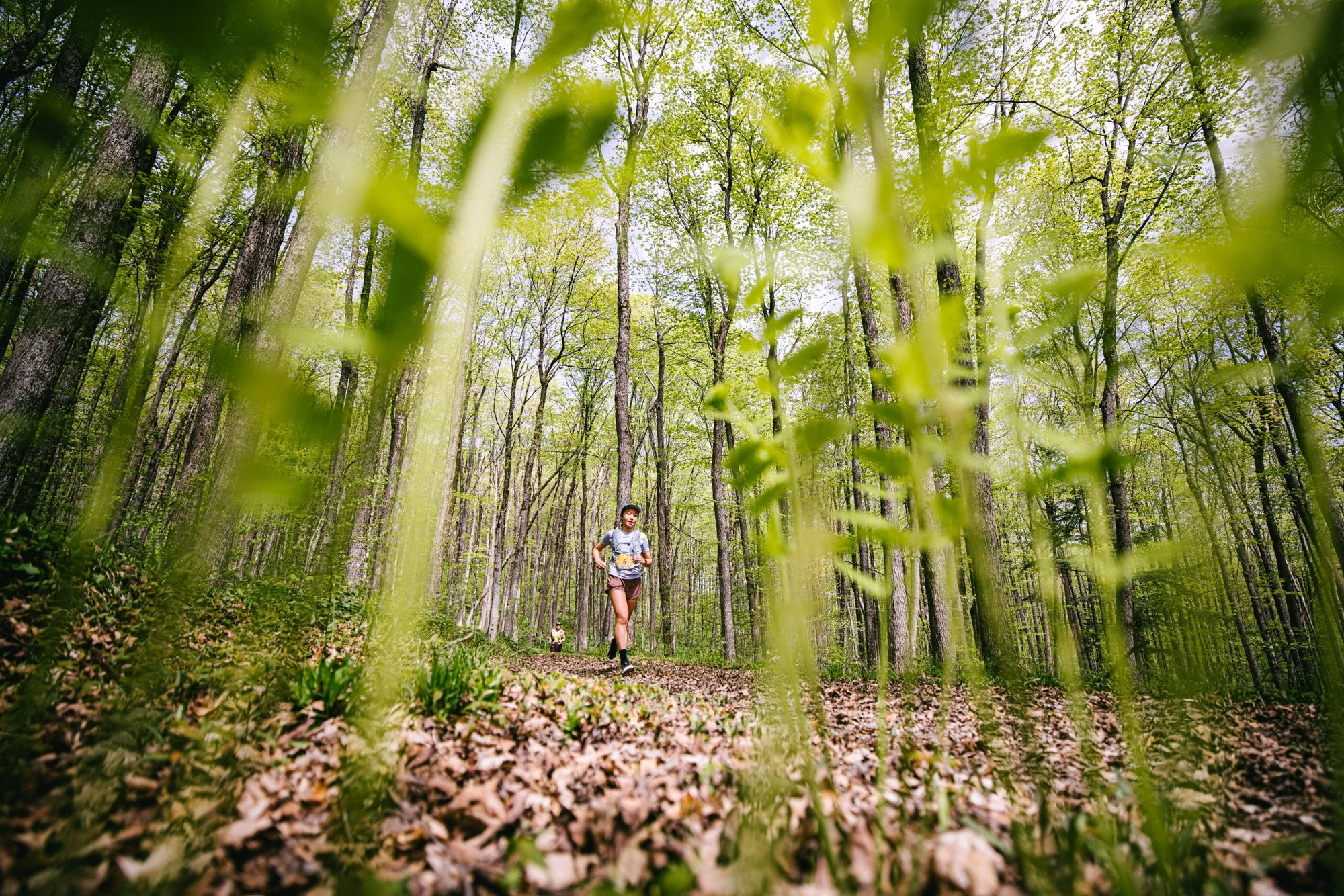
You pass through working and conserved landscapes. The surface changes beneath you. Wide roads become narrow paths. The forest opens into fields. A runnable section gives way to a climb, and the climb eventually leads somewhere new.
There is a sense of progression to it—the feeling that you are traversing a landscape rather than completing a prescribed number of miles within it.
That is difficult to communicate on an elevation profile. It is also the part runners tend to remember.
THE MIDDLE GROUND IS NOT THE EASY GROUND
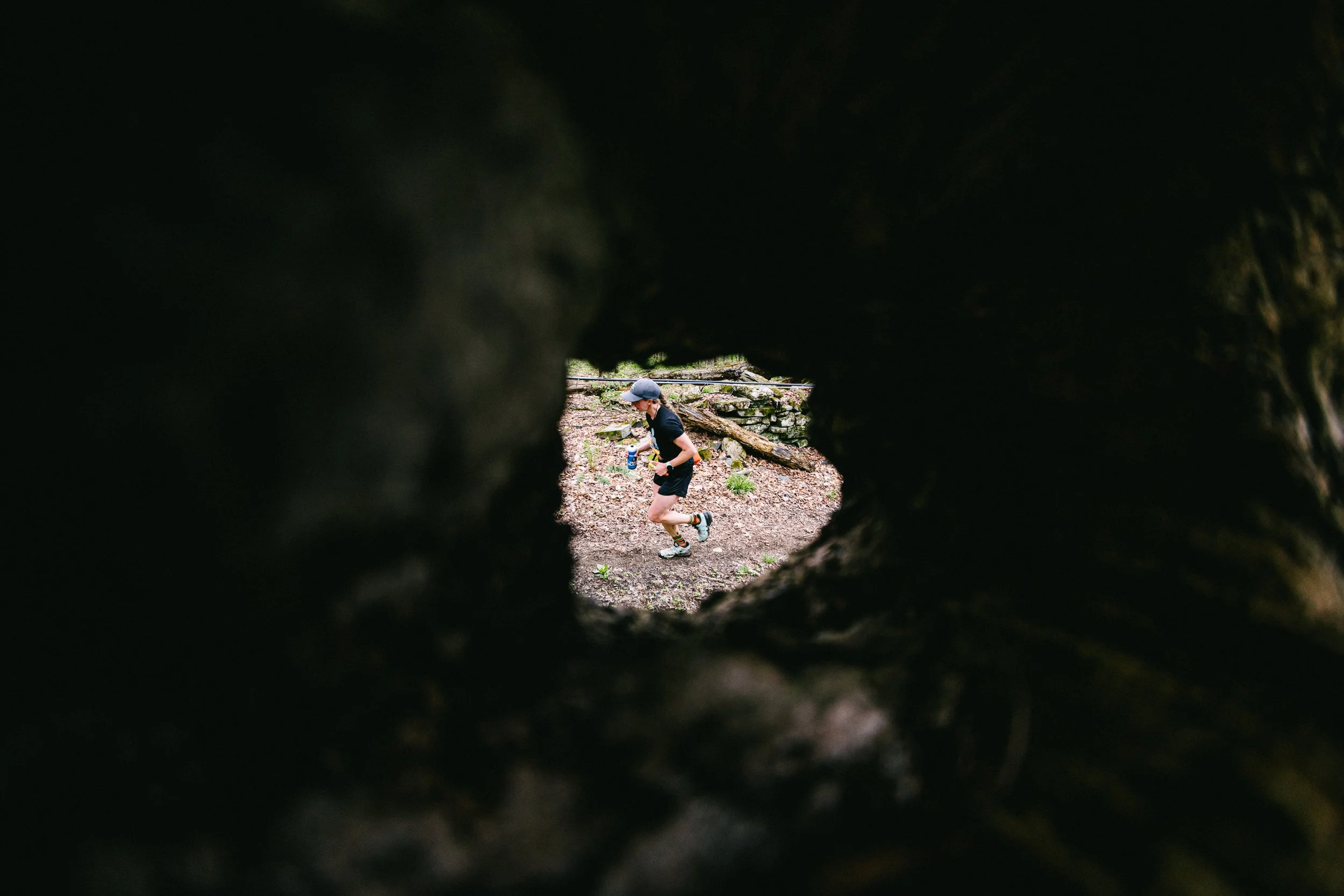
Calling The Overland TRAIL a bridge between road and trail racing does not mean it is a watered-down version of either.
Fifteen VTAF miles and approximately 2,500 feet of climbing make for a serious day. Road runners will encounter more elevation, uneven footing and decision-making than they are accustomed to. Experienced trail runners will find long sections that reward rhythm, efficiency and actual running economy + leg speed.
The challenge comes from the combination.
You need enough patience for the climbs, enough coordination for the trails and enough fitness to keep running once the course opens back up. It rewards the complete runner more than the specialist.
That makes it approachable without making it ordinary.
A strong road runner can enter without first becoming an ultrarunner. A seasoned trail runner can race it hard without spending an entire day on course. And a trail-curious runner can choose the shorter PATH route and experience the same terrain on a more manageable scale.
A VERY VERMONT KIND OF RACE
Vermont’s best outdoor experiences rarely fit into one category.
Our roads become trails. Our trails become old roads. Maintained routes gradually turn into unmaintained ones. The line between public infrastructure, recreation and working landscape is often surprisingly thin.
The Overland TRAIL is built around that reality.
It is not trying to imitate a major city road race or a Western mountain ultra. It is also not trying to manufacture difficulty simply for the sake of being difficult.
The goal is simpler: create the most interesting continuous route possible through a landscape worth experiencing.
That may be why the race feels familiar to both road and trail runners, while not fully belonging to either world.
For a long time, runners in New England have had to choose between chasing a precise time on pavement and disappearing into the mountains for an ultra-distance adventure.
There should be something in between.
We think this is it.
– Ansel & the Vermont Overland team
VERMONT OVERLAND TRAIL
Sunday, August 16, 2026
West Windsor, Vermont